BitcoinWorld
DeepL Voice Translation Breakthrough: Revolutionizing Real-Time Multilingual Communication with AI
DeepL, the renowned translation technology company celebrated for its superior text translation accuracy, has launched a transformative voice-to-voice translation suite that promises to reshape real-time multilingual communication across business and professional environments. This strategic expansion represents a significant evolution in AI-powered language technology, moving beyond written text to conquer the complex challenges of spoken language conversion.
DeepL Voice Translation: From Text Pioneer to Audio Innovator
The company released its comprehensive voice translation platform today, marking a pivotal moment in its eight-year journey from text-focused startup to full-spectrum language technology provider. DeepL’s new suite specifically targets critical professional use cases including virtual meetings, mobile conversations, web-based discussions, and specialized applications for frontline workers through customizable applications. Furthermore, the company introduced a developer API that enables businesses to integrate DeepL’s translation capabilities into customized solutions, particularly for customer service and call center operations.
“After dedicating numerous years to perfecting text translation, voice represented the natural progression for our technology,” explained DeepL CEO Jarek Kutylowski in an exclusive interview. “We have achieved substantial advancements in text and document translation quality. However, we identified a significant gap in the market for truly effective real-time voice translation solutions.”
Kutylowski emphasized that the primary technical challenge in developing real-time translation technology involves balancing two competing priorities: minimizing latency—the delay between spoken input and translated audio output—while maintaining exceptional translation accuracy. The company’s solution addresses this through proprietary algorithms optimized for speed without compromising the linguistic precision that made DeepL’s text translation service industry-leading.
The Technical Architecture Behind the Innovation
Currently, DeepL’s system employs a three-step process: converting speech to text, applying its sophisticated translation algorithms, then converting the translated text back to speech using advanced voice synthesis. This approach leverages the company’s established strengths in text translation while incorporating cutting-edge speech recognition and generation technologies. The company controls the entire technological stack, from initial audio processing to final voice output, ensuring quality consistency across all components.
Looking forward, DeepL plans to develop an end-to-end voice translation model that bypasses the intermediate text conversion step entirely. This ambitious technical direction could potentially reduce latency further while potentially improving the natural flow and intonation of translated speech.
Practical Applications and Integration Capabilities
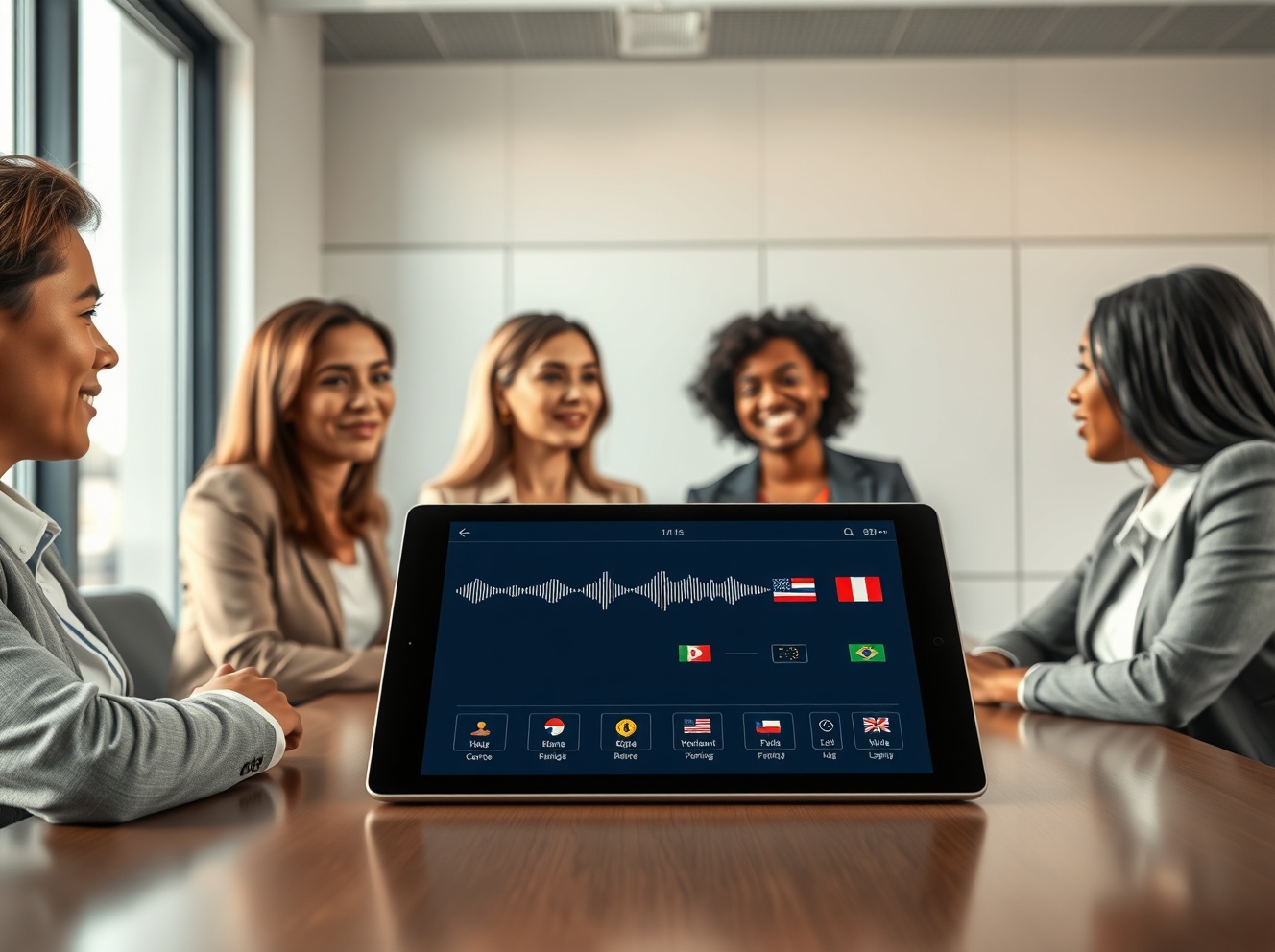
DeepL’s voice translation technology manifests through several practical implementations designed for modern professional environments. The company has developed dedicated add-ons for major collaboration platforms including Zoom and Microsoft Teams. These integrations allow meeting participants to choose between hearing real-time translated audio while others speak in their native languages or following translated text captions on their screens.
The platform currently operates under an early access program, with DeepL inviting organizations to join a waitlist for implementation. This phased rollout strategy enables the company to refine the technology based on real-world usage patterns and professional feedback before broader public availability.
Beyond enterprise meeting software, DeepL offers a versatile product for mobile and web-based conversations that function effectively both in person and remotely. The technology supports group conversation scenarios common in training sessions, workshops, and collaborative meetings. Participants can join these multilingual discussions through simple QR code scanning, eliminating complex setup procedures.
Customization and Adaptive Learning Features
A distinctive capability of DeepL’s voice technology involves its adaptive learning functionality. The system can learn and incorporate custom vocabulary, including industry-specific terminology, company names, product references, and personal names. This customization potential makes the technology particularly valuable for specialized professional fields where standard translation systems often struggle with niche terminology.
Kutylowski highlighted how artificial intelligence is fundamentally transforming customer service expectations and capabilities. “A sophisticated translation layer enables companies to provide support in languages where qualified bilingual staff are scarce or prohibitively expensive to hire,” he noted. This application addresses significant global business challenges in customer experience and support accessibility.
Competitive Landscape and Market Positioning
DeepL enters a competitive space populated by several well-funded startups specializing in various aspects of voice and translation technology. Sanas, which secured $65 million in funding last year from investors including Quadrille Capital and Teleperformance, focuses on real-time accent modification technology primarily targeting call center applications.
Dubai-based Camb.AI concentrates on speech synthesis and translation for media and entertainment companies, partnering with Amazon Web Services to provide scalable dubbing and localization solutions for video content. Meanwhile, Palabra, backed by Reddit co-founder Alexis Ohanian’s venture firm Seven Seven Six, develops real-time speech translation technology designed to preserve both semantic meaning and the speaker’s original vocal characteristics, placing it in more direct competition with DeepL’s new offering.
Despite this competition, DeepL believes its years of experience in text translation provides a significant advantage in translation quality—a factor the company considers crucial for professional adoption. The company’s established reputation for accuracy in text translation creates a foundation of trust as it expands into voice applications.
Implementation Timeline and Availability
The voice translation suite launches with specific integration timelines and availability windows. Early access participants will help shape the final product through structured feedback mechanisms. DeepL plans to expand availability gradually throughout 2025, with full public release anticipated by early 2026. Pricing structures will vary between individual, team, and enterprise tiers, reflecting different usage volumes and feature requirements.
Technical Specifications and Performance Metrics
DeepL’s voice translation technology operates with impressive technical specifications. The system supports initial language pairs including English, Spanish, French, German, Japanese, Chinese, and Italian, with plans to expand to 30+ languages within 18 months. Current latency measurements average between 1.5 and 3 seconds depending on language complexity and connection quality.
The technology employs neural machine translation models specifically trained on conversational speech patterns rather than formal written text. This training approach improves the naturalness and contextual appropriateness of translations in dialogue scenarios. Audio processing occurs through both cloud-based and optional edge computing configurations, providing flexibility for different privacy and latency requirements.
Privacy and Data Security Considerations
Given the sensitive nature of voice data in professional contexts, DeepL has implemented robust privacy protections. The company offers data processing options that include temporary audio storage with automatic deletion, end-to-end encryption for all voice data transmissions, and compliance with major international data protection standards including GDPR and CCPA. Enterprise clients can request customized data handling agreements based on their specific regulatory requirements.
Industry Impact and Future Developments
The introduction of sophisticated voice translation technology carries significant implications for global business operations, education, healthcare, and international diplomacy. By reducing language barriers in real-time conversations, DeepL’s technology could facilitate more seamless international collaboration, expand market access for businesses, and improve accessibility in multilingual societies.
Future development roadmaps include enhanced emotion preservation in translated speech, better handling of regional dialects and colloquial expressions, and integration with augmented reality platforms for real-time visual translation overlays. The company also explores applications in live event interpretation, emergency response coordination, and educational settings where immediate translation can enhance learning accessibility.
Expert Perspectives on Translation Technology Evolution
Language technology experts note that voice translation represents the next frontier in breaking down communication barriers. While text translation has matured significantly in recent years, spoken language presents unique challenges including tone, pacing, interruption handling, and non-verbal communication cues. Successful voice translation systems must address these complexities while maintaining conversational flow and natural interaction patterns.
The evolution from text-based to voice-based translation mirrors broader technological shifts toward more natural, conversational interfaces across digital platforms. As artificial intelligence systems become increasingly sophisticated in understanding and generating human speech, translation technology naturally progresses toward more seamless, real-time applications.
Conclusion
DeepL’s expansion into voice-to-voice translation represents a significant advancement in multilingual communication technology, building upon the company’s established excellence in text translation. By addressing the complex challenges of real-time voice conversion while maintaining high accuracy standards, DeepL positions itself at the forefront of a rapidly evolving market. The technology’s practical applications across business meetings, customer service, education, and international collaboration demonstrate its potential to transform how people communicate across language boundaries. As the platform evolves through early access testing and broader deployment, its impact on global connectivity and cross-cultural understanding will become increasingly apparent, potentially reshaping professional communication standards worldwide.
FAQs
Q1: How does DeepL’s voice translation differ from existing text translation services?
DeepL’s voice translation represents a completely new service category that converts spoken language directly to translated speech in real time, whereas traditional services focus exclusively on written text conversion. The voice technology incorporates speech recognition, real-time translation processing, and voice synthesis in an integrated pipeline.
Q2: What platforms currently support DeepL’s voice translation integration?
The initial release includes dedicated add-ons for Zoom and Microsoft Teams, with web and mobile applications for direct conversations. The company plans to expand to additional collaboration platforms throughout 2025 based on user demand and technical feasibility.
Q3: How accurate is DeepL’s voice translation compared to human interpreters?
While machine translation continues to improve, it typically achieves different accuracy profiles than human interpreters. DeepL’s technology excels at vocabulary accuracy and grammatical correctness but may not match human interpreters in capturing nuanced cultural references or highly idiomatic expressions. For many professional contexts, however, it provides sufficient accuracy for effective communication.
Q4: What languages does the voice translation service currently support?
The initial release supports major languages including English, Spanish, French, German, Japanese, Chinese, and Italian. DeepL plans to expand to approximately 30 languages within 18 months, prioritizing languages based on user demand and linguistic complexity.
Q5: How does DeepL ensure privacy and security for voice conversations?
The company implements multiple privacy protections including optional end-to-end encryption, temporary audio storage with automatic deletion, and compliance with international data protection regulations. Enterprise clients can negotiate customized data handling agreements to meet specific security requirements.
This post DeepL Voice Translation Breakthrough: Revolutionizing Real-Time Multilingual Communication with AI first appeared on BitcoinWorld.