BitcoinWorld
Anthropic’s Private Market Surge Faces SpaceX IPO Showdown: The Billion-Dollar Liquidity Battle
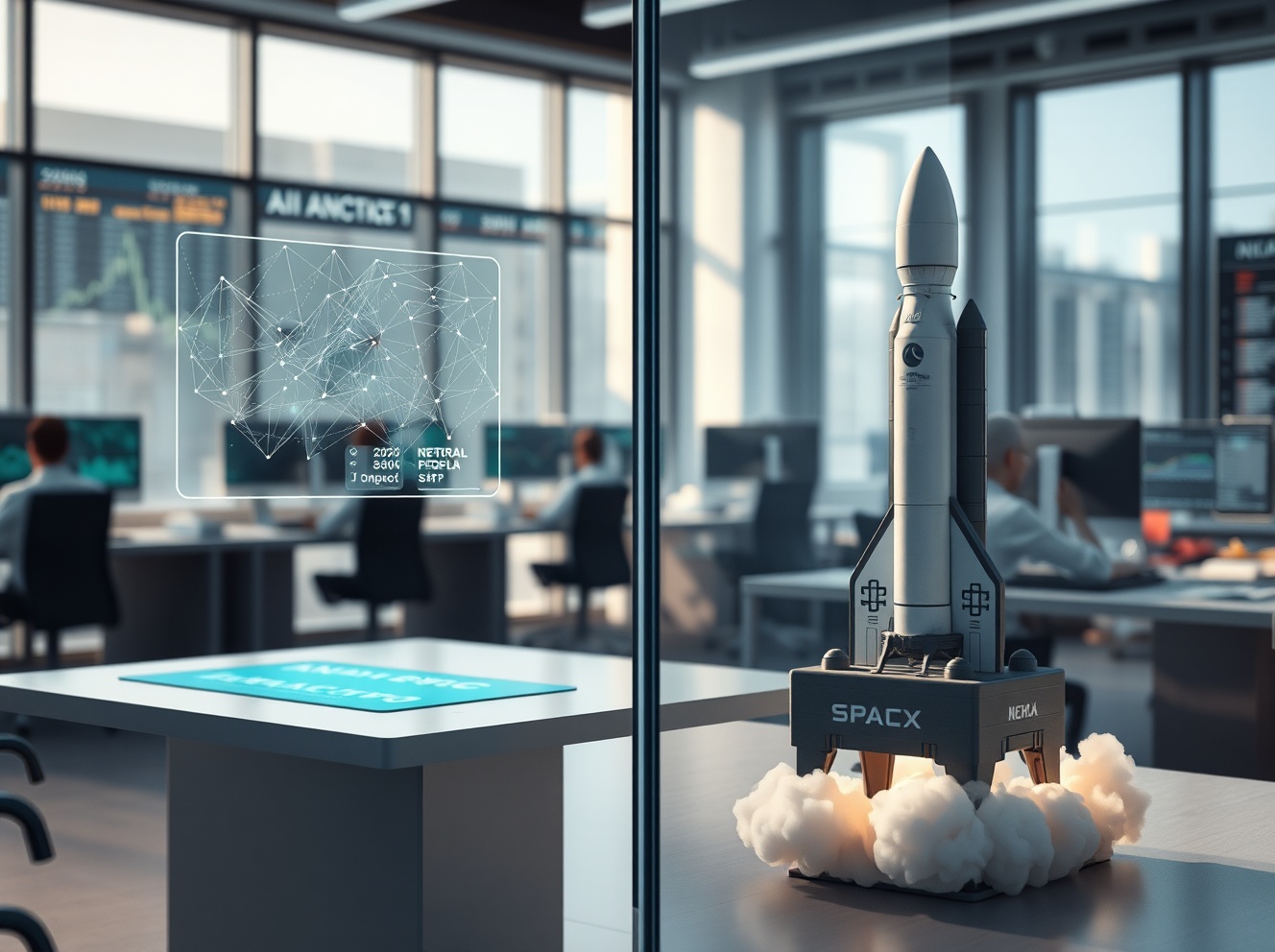
The private securities market is experiencing unprecedented tension as Anthropic’s soaring demand collides with SpaceX’s impending public offering, creating a billion-dollar liquidity showdown that could reshape investment strategies for years to come. According to Glen Anderson, president of Rainmaker Securities, the secondary market narrative now revolves around three dominant players: Anthropic, OpenAI, and SpaceX, with complex dynamics that extend far beyond surface-level headlines. This analysis examines the shifting power balance in late-stage private investing through exclusive market data and expert insights from Miami-based trading professionals who have witnessed the market’s evolution since 2010.
Anthropic’s Unprecedented Market Dominance
Demand for Anthropic shares has reached extraordinary levels in private trading venues. Anderson confirms that Anthropic represents the most difficult stock to source in Rainmaker’s marketplace, which facilitates transactions in approximately 1,000 private company securities. “There’s just no sellers,” Anderson stated during an exclusive interview, highlighting the scarcity that has driven intense competition among institutional investors. This situation aligns with Bloomberg’s recent reporting that buyers have indicated $2 billion of ready capital specifically earmarked for Anthropic investments.
The company’s public standoff with the Department of Defense initially appeared problematic but ultimately amplified investor interest. Anderson observed that the controversy made Anthropic’s story more distinctive from OpenAI’s narrative, transforming the company into what some perceive as a heroic challenger to government overreach. This differentiation has proven particularly valuable in a market where investors previously adopted a “bet on everyone” approach to artificial intelligence companies.
The OpenAI Counter-Narrative
While Anthropic enjoys remarkable demand, OpenAI’s secondary market presents a contrasting picture. Approximately $600 million in OpenAI shares currently available for sale have struggled to find buyers, according to market participants. Anderson confirmed that OpenAI shares are trading at valuations reflecting approximately $765 billion—a noticeable discount from the company’s recent $852 billion primary-round valuation. The secondary market for OpenAI shares lacks the vibrancy observed with Anthropic, though Anderson cautions against interpreting this as a simple binary choice for investors.
OpenAI has implemented measures to control secondary trading through authorized banking channels. Major financial institutions including Morgan Stanley and Goldman Sachs now offer OpenAI shares to high-net-worth clients without charging carry fees, contrasting with the 15% to 20% profit fees Goldman charges for Anthropic exposure. This strategic difference in fee structures reveals varying market approaches between the two AI giants.
SpaceX’s Consistent Market Performance
SpaceX occupies a unique position in the private market landscape, having avoided the severe corrections that affected many technology companies between 2022 and 2024. During that period, numerous private company shares declined 60% to 70% from their peak valuations after rapid run-ups. Anderson describes SpaceX’s trajectory as “pretty much consistently up and to the right,” attributing this stability to disciplined pricing strategies and management restraint during funding rounds.
The rocket and satellite company’s conservative approach to valuation has created enormous returns for early investors. A $1 billion investment by Google and Fidelity in 2015, when SpaceX was valued at approximately $12 billion, has generated returns exceeding 100 times the original investment. With SpaceX now valued above $1 trillion ahead of its planned public offering, these early positions represent some of the most successful private market investments in recent history.
The Imminent IPO Impact
SpaceX filed confidentially for an initial public offering this week, setting the stage for what could become one of the largest market debuts ever recorded. Elon Musk reportedly aims to raise between $50 billion and $75 billion, potentially as early as June. Only Saudi Aramco’s 2019 debut, which valued the energy company at $1.7 trillion, approaches this scale in market history.
This filing has already altered secondary market dynamics for SpaceX shares. Anderson reported seeing “a flood of SpaceX investors coming to me saying, ‘Can you give me SpaceX?’” creating exceptionally active buying interest. However, supply continues to diminish as existing shareholders anticipate the approaching liquidity event, reducing their incentive to sell before the public offering.
The Liquidity Competition Challenge
The timing of SpaceX’s public market debut creates significant challenges for Anthropic and OpenAI, both of which are reportedly exploring their own public offerings this year. Anderson warns that “SpaceX is going to soak up a lot of liquidity” from institutional investors, creating potential disadvantages for companies that follow. The first mover in any investment vertical typically accesses available capital more easily, while subsequent offerings face increased scrutiny and potentially diminished funding.
This dynamic presents a strategic dilemma for AI companies: proceed with an early IPO to test market receptivity, or wait and risk that the largest investment checks have already been written to earlier entrants. The substantial capital requirements of Anthropic, OpenAI, and SpaceX mean they are competing not just for investor attention but for the finite pool of institutional capital allocated to major public offerings.
Market Structure Evolution
The private securities market has transformed dramatically since Anderson began brokering trades in 2010. What was once a niche sector with institutional investors that could be “counted on two hands” has expanded to include thousands of participants. Rainmaker Securities now facilitates transactions across approximately 1,000 private stocks, reflecting the market’s maturation and the growing importance of secondary trading for late-stage companies.
This expansion has created more sophisticated pricing mechanisms and increased transparency, though significant information asymmetries still exist between company insiders and external investors. The current concentration of interest in Anthropic, OpenAI, and SpaceX demonstrates how specific narratives can dominate market attention, potentially overshadowing other valuable investment opportunities.
Conclusion
The private market landscape faces a pivotal moment as Anthropic’s remarkable demand, OpenAI’s strategic repositioning, and SpaceX’s imminent public offering create complex interdependencies. The liquidity competition between these technology giants will test market capacity and investor appetite, with implications extending far beyond these individual companies. As institutional capital flows toward what may become historic public offerings, the decisions made in coming months will shape investment patterns and valuation methodologies for years. The secondary market’s evolution from niche to mainstream continues, with these three companies representing both its current focal point and its future direction.
FAQs
Q1: Why is Anthropic stock so difficult to obtain in private markets?
Anthropic shares face extraordinary demand with limited selling interest, creating severe supply constraints. The company’s distinctive positioning following its Department of Defense standoff and differentiation from OpenAI has intensified investor competition for available shares.
Q2: How does SpaceX’s IPO timing affect other technology companies?
SpaceX’s massive planned public offering could absorb substantial institutional liquidity, potentially leaving fewer investment dollars available for subsequent offerings from Anthropic, OpenAI, or other technology companies exploring public markets.
Q3: What explains the valuation difference between OpenAI’s primary and secondary markets?
OpenAI shares trade at approximately $765 billion in secondary markets versus an $852 billion primary-round valuation, reflecting different investor perceptions, liquidity considerations, and the company’s efforts to control secondary trading through authorized channels.
Q4: How has the private securities market changed since 2010?
The market has expanded from a niche sector with few institutional participants to a mainstream investment arena with thousands of active investors, increased transaction volumes, and more sophisticated pricing mechanisms across approximately 1,000 traded securities.
Q5: What investment strategy do institutional investors currently favor for AI companies?
While some investors previously adopted a “bet on everyone” approach to artificial intelligence, many are now making more selective allocations based on company differentiation, with particular interest in Anthropic’s distinctive positioning relative to OpenAI.
This post Anthropic’s Private Market Surge Faces SpaceX IPO Showdown: The Billion-Dollar Liquidity Battle first appeared on BitcoinWorld.