BitcoinWorld
Uber Autonomous Vehicle Strategy: The $10 Billion Gamble Transforming Transportation
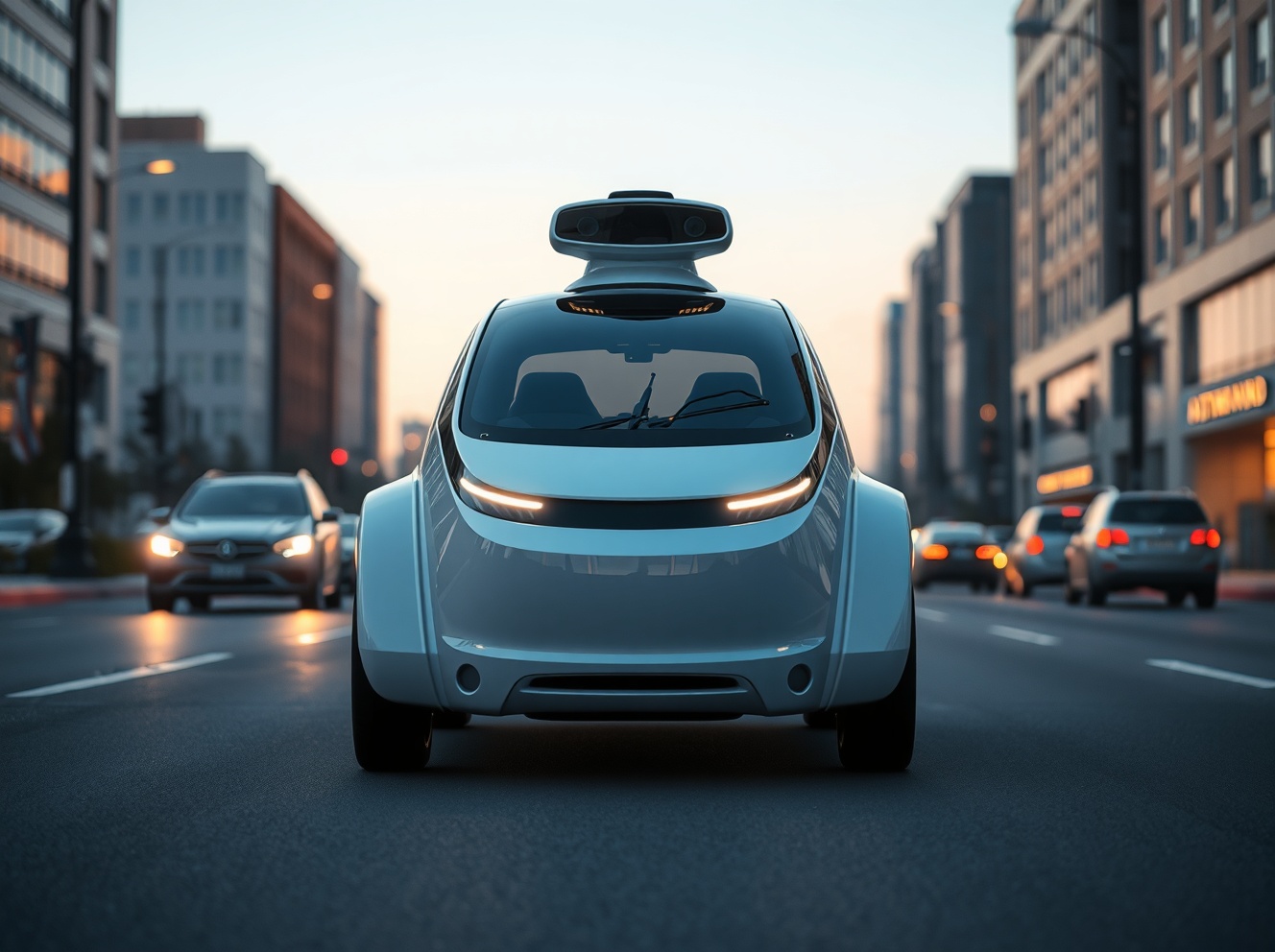
Uber has committed more than $10 billion to autonomous vehicle technology, according to Financial Times analysis of public records and industry sources. This massive investment signals a fundamental strategic shift for the ride-hailing giant as it transitions toward an asset-heavy model focused on fleet ownership. The move represents one of the largest corporate bets on autonomous transportation technology to date, with significant implications for urban mobility, employment patterns, and technological development across the transportation sector.
Uber’s Autonomous Vehicle Investment Breakdown
The Financial Times analysis reveals that Uber’s $10 billion commitment comprises two distinct components. Approximately $2.5 billion represents direct investments in autonomous vehicle companies, while the remaining $7.5 billion is allocated for purchasing robotaxis over the coming years. This financial commitment spans multiple autonomous vehicle categories, including passenger robotaxis, autonomous freight vehicles, and drone delivery systems.
Uber’s investment portfolio includes strategic stakes in several prominent autonomous vehicle developers. The company has invested in WeRide, a Chinese autonomous driving technology company, and Lucid Motors, an electric vehicle manufacturer. Additionally, Uber maintains positions in Nuro, which specializes in autonomous delivery vehicles, and Rivian, the electric truck and SUV maker. The company also holds investments in Wayve, a UK-based autonomous vehicle startup focusing on embodied intelligence.
Strategic Shift from Asset-Light to Asset-Heavy
Uber’s current investment strategy represents a significant departure from its original business model. The company initially positioned itself as an asset-light platform, connecting drivers with passengers without owning vehicles. However, between 2015 and 2018, Uber pursued several asset-heavy initiatives, including the launch of Uber Elevate for electric air taxis and the establishment of Uber ATG, its in-house autonomous vehicle unit.
The company acquired Otto, an autonomous trucking startup, in 2016 and purchased micromobility startup Jump in 2018. In 2020, Uber reversed course, selling Uber ATG to Aurora Innovation, transferring Jump to Lime, and divesting Elevate to Joby Aviation. Despite these sales, Uber retained equity stakes in all three companies, maintaining strategic connections to these technologies.
The New Asset-Heavy Approach
Uber’s current strategy differs fundamentally from its previous asset-heavy period. Rather than developing autonomous vehicle technology internally, the company now focuses on owning or leasing physical assets—specifically, fleets of robotaxis manufactured by partner companies. This approach allows Uber to control deployment and operations while leveraging the specialized expertise of autonomous vehicle developers.
The shift toward fleet ownership could significantly impact Uber’s financial statements in coming years. Autonomous vehicle fleets represent substantial capital expenditures but may offer operational cost advantages over human-driven vehicles in the long term. This strategic pivot acknowledges the limitations of pure platform models in autonomous transportation, where vehicle availability and maintenance become critical competitive factors.
Industry Context and Competitive Landscape
Uber’s massive investment occurs within a rapidly evolving autonomous vehicle landscape. Several technology companies and traditional automakers are pursuing similar strategies with varying approaches. Waymo, owned by Alphabet, continues to expand its robotaxi services, recently removing waitlists in Miami and Orlando while beginning public road testing in London.
Tesla has introduced a new self-driving application that simplifies access to its Full Self-Driving software and provides usage statistics. General Motors’ Cruise and Ford’s autonomous vehicle initiatives represent additional competition in the space. The autonomous vehicle sector has also seen significant venture capital activity, with Eclipse Partners raising a $1.3 billion fund specifically targeting transportation and enterprise technology startups.
Major Autonomous Vehicle Investments and Developments
| Company |
Investment/Focus |
Recent Development |
| Uber |
$10B total commitment |
Fleet ownership strategy |
| Waymo |
Alphabet subsidiary |
Expanding to London, Miami, Orlando |
| Tesla |
FSD software development |
New self-driving app with statistics |
| General Motors |
Cruise automation |
Ongoing urban deployment |
Financial and Operational Implications
The $10 billion commitment represents one of the largest corporate investments in autonomous vehicle technology. This expenditure will likely appear on Uber’s balance sheet as capital investments in property, plant, and equipment. The company’s shift toward asset ownership may affect its financial metrics, including depreciation expenses, asset turnover ratios, and return on invested capital.
Operationally, fleet ownership introduces new challenges and opportunities. Uber must develop capabilities in vehicle maintenance, charging infrastructure, and fleet management. The company will need to establish partnerships with charging network providers, maintenance facilities, and insurance companies specializing in autonomous vehicles. These operational requirements represent a significant expansion beyond Uber’s core platform business.
Regulatory and Safety Considerations
Autonomous vehicle deployment faces substantial regulatory hurdles across multiple jurisdictions. Safety certification, insurance requirements, and operational restrictions vary significantly between cities, states, and countries. Uber’s fleet ownership strategy must navigate this complex regulatory landscape while maintaining public trust in autonomous vehicle safety.
The company participates in industry discussions about autonomous vehicle standards and regulations. Uber collaborates with the National Highway Traffic Safety Administration (NHTSA) and similar agencies internationally to establish safety protocols and reporting requirements. These regulatory engagements are essential for scaling autonomous vehicle operations beyond limited pilot programs.
Technological Partnerships and Ecosystem Development
Uber’s strategy relies heavily on partnerships with autonomous vehicle technology developers. The company maintains relationships with multiple hardware and software providers, creating a diversified technology portfolio. This approach reduces dependence on any single technology provider while accelerating deployment timelines through parallel development efforts.
The autonomous vehicle ecosystem extends beyond vehicle manufacturers to include sensor developers, mapping companies, and artificial intelligence specialists. Uber collaborates with companies across this value chain to integrate complementary technologies into its fleet operations. These partnerships create network effects that benefit all participants while advancing the overall state of autonomous vehicle technology.
Market Impact and Future Projections
Industry analysts project substantial growth in autonomous vehicle adoption throughout the latter half of this decade. The global autonomous vehicle market may exceed $300 billion by 2030, according to some estimates. Uber’s early and substantial investment positions the company to capture significant market share in autonomous ride-hailing services.
The transition to autonomous vehicles could transform urban transportation economics. Without driver compensation, per-mile costs may decrease substantially, potentially increasing transportation accessibility. However, these economic benefits must balance against substantial capital investment requirements and ongoing operational expenses associated with autonomous fleet management.
- Cost Structure Transformation: Shift from variable driver costs to fixed asset depreciation
- Service Availability: Potential for 24/7 operation without human driver limitations
- Safety Improvements: Reduced accident rates through elimination of human error
- Environmental Impact: Integration with electric vehicle platforms reduces emissions
Conclusion
Uber’s $10 billion commitment to autonomous vehicle technology represents a strategic pivot with far-reaching implications for the transportation industry. The company’s shift toward an asset-heavy model focused on fleet ownership marks a fundamental evolution from its original platform business. This investment positions Uber at the forefront of autonomous vehicle deployment while introducing new financial, operational, and regulatory considerations.
The success of Uber’s autonomous vehicle strategy will depend on multiple factors, including technological advancement, regulatory approval, and economic viability. As autonomous vehicle technology continues to mature, Uber’s substantial investment may provide competitive advantages in scaling operations and optimizing fleet economics. The transportation landscape of 2025 and beyond will likely reflect the outcomes of this strategic gamble on autonomous vehicle technology.
FAQs
Q1: How much has Uber invested in autonomous vehicle technology?
Uber has committed over $10 billion to autonomous vehicle technology, including $2.5 billion in direct investments and $7.5 billion allocated for purchasing robotaxis over the coming years.
Q2: What companies has Uber invested in for autonomous vehicle development?
Uber has invested in multiple autonomous vehicle companies, including WeRide, Lucid Motors, Nuro, Rivian, and Wayve, creating a diversified portfolio of autonomous transportation technologies.
Q3: How does Uber’s current autonomous vehicle strategy differ from its previous approach?
Unlike its previous internal development efforts, Uber now focuses on owning or leasing physical autonomous vehicle fleets manufactured by partner companies, representing a shift from technology development to fleet ownership and operation.
Q4: What are the main challenges facing Uber’s autonomous vehicle deployment?
Key challenges include regulatory approval across multiple jurisdictions, safety certification, public acceptance, technological reliability, and the substantial capital investment required for fleet acquisition and maintenance.
Q5: How might autonomous vehicles change Uber’s business model?
Autonomous vehicles could transform Uber from a platform connecting drivers and passengers to a transportation service provider owning and operating vehicle fleets, fundamentally changing its cost structure, asset base, and operational requirements.
This post Uber Autonomous Vehicle Strategy: The $10 Billion Gamble Transforming Transportation first appeared on BitcoinWorld.