BitcoinWorld
Lucid Bots Secures $20M to Revolutionize Dangerous Window Cleaning with Practical Drones
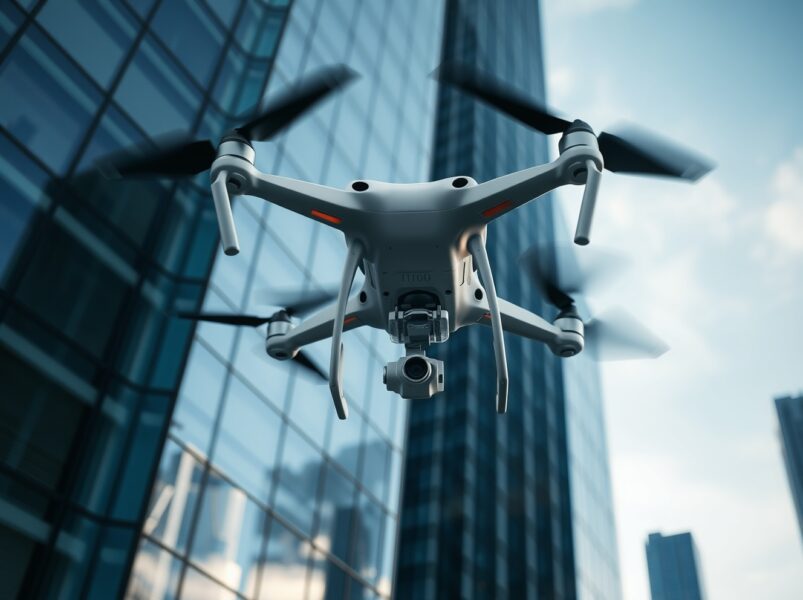
CHARLOTTE, NC – June 9, 2025 – In a robotics sector often captivated by humanoid prototypes and viral dance videos, Lucid Bots is charting a distinctly different course. The company recently announced a $20 million Series B funding round to scale production of its Sherpa window-washing drones, addressing what founder Andrew Ashur calls “the largest asset class in the world” with pragmatic technology. This substantial investment, co-led by Cubit Capital and Idea Fund Partners, brings Lucid Bots’ total funding to $34 million and signals growing investor confidence in robotics that solve immediate, dangerous workplace problems.
Lucid Bots’ Practical Robotics Philosophy
While many robotics companies showcase laboratory demonstrations, Lucid Bots emphasizes field performance. The company’s drones currently operate on commercial job sites, performing hazardous window cleaning tasks that traditionally require workers to scale buildings on swing stages. “We sell performance on the job site that shows up in our customers’ profits and losses,” Ashur explained in an exclusive interview. “We’re not just in labs and simulators. We’ve got dirt under our fingernails.” This hands-on approach developed through the company’s unusual origin story. Ashur first conceived the idea while studying economics at Davidson College, witnessing window washers battling dangerous winds on a swinging platform. That harrowing experience sparked his mission to develop safer alternatives through robotics.
The $20 Million Funding Round and Expansion Plans
The recent $20 million investment represents a significant milestone for the North Carolina-based startup. Lucid Bots will allocate these resources toward several critical areas:
- Manufacturing Scale: Expanding production capacity to meet accelerating demand
- Team Growth: Hiring across engineering, operations, and customer support roles
- Product Development: Enhancing both the Sherpa drone and Lavo robot platforms
- Market Expansion: Developing tools for adjacent applications like painting and waterproofing
Ashur noted the company has experienced such rapid growth that they’ve “run out of parking spots” at their manufacturing facility. The funding will help address overwhelming demo requests that currently exceed available hours in their schedule.
From Liberal Arts to Robotics Leadership
Ashur’s journey from economics and Spanish student to robotics CEO underscores the unconventional path that initially challenged investor confidence. “It took a fair amount of convincing to get VCs to back a robotics founder with a liberal arts background and no robotics experience,” Ashur acknowledged. The company launched in 2018 as a cleaning service itself, taking contract jobs to intimately understand industry pain points. This operational experience proved invaluable, leading to chemical burns but also crucial insights that shaped their drone development. After two years of hands-on learning, Lucid Bots pivoted to full-time robotics manufacturing with significantly improved product-market fit.
Addressing Critical Infrastructure Challenges
Lucid Bots targets what Ashur identifies as three compounding issues in built infrastructure. First, global infrastructure is aging simultaneously. Second, new construction projects grow increasingly larger and more complex to maintain. Third, fewer workers are willing or able to perform dangerous maintenance tasks at height. These converging challenges create substantial market opportunities for robotic solutions. The company’s technology addresses a specific niche within the broader $45 billion commercial cleaning industry, particularly the high-rise maintenance segment that carries significant insurance costs and safety concerns.
Product Evolution and Data-Driven Improvements
The company’s growth trajectory reveals accelerating market adoption. Lucid Bots required five years to sell its first 100 units but now approaches 1,000 deployments. This exponential growth reflects both product maturation and increasing industry acceptance. The Sherpa drone system collects operational data during cleaning tasks, feeding information back to proprietary software that continuously improves performance. This closed-loop system enables iterative enhancements without requiring physical hardware redesigns. Additionally, the company has successfully adapted its technology for waterproofing applications, recently completing a major university stadium project using the same core platform architecture.
Industry Context and Competitive Landscape
Lucid Bots operates within the commercial drone market, which MarketsandMarkets projects will reach $58.4 billion by 2030. However, the company distinguishes itself through vertical integration and specialized application focus. Unlike general-purpose drones, Sherpa systems feature custom-designed cleaning mechanisms, chemical delivery systems, and safety protocols specifically for building maintenance. The table below illustrates key differentiators:
| Feature |
Lucid Bots Sherpa |
General Commercial Drones |
| Primary Application |
Building facade maintenance |
Aerial photography, inspection |
| Cleaning System |
Integrated spray and scrub |
Typically none |
| Safety Features |
Redundant systems for height |
Basic obstacle avoidance |
| Data Collection |
Maintenance analytics |
Visual imagery only |
Future Applications and Market Expansion
Beyond window cleaning, Lucid Bots identifies multiple adjacent opportunities. The company receives approximately 50 monthly inbound leads for painting and coating applications before actively marketing those capabilities. This organic demand suggests substantial market potential for their adaptable robotic platform. Future applications may include:
- Building facade inspections and diagnostics
- Preventive maintenance scheduling based on collected data
- Specialized surface treatments for historical preservation
- Solar panel cleaning for renewable energy installations
The company’s full-stack approach—designing, manufacturing, and supporting its robots domestically—provides control over quality and rapid iteration capabilities that imported or outsourced solutions cannot match.
Conclusion
Lucid Bots’ $20 million funding round validates a growing market for practical robotics that address dangerous, essential work. While flashier humanoid robots capture headlines, Ashur’s company demonstrates that solving unglamorous problems can build substantial businesses. The window-washing drone market represents just the initial application for technology that could transform how society maintains its built environment. As infrastructure ages and skilled labor shortages intensify, robotic solutions like those from Lucid Bots may become essential rather than optional. Their success illustrates that sometimes the most innovative technology doesn’t look futuristic—it simply makes dangerous jobs safer and more efficient.
FAQs
Q1: What exactly does Lucid Bots manufacture?
Lucid Bots designs and manufactures specialized drones and robots for commercial building maintenance. Their flagship product is the Sherpa window-washing drone, which cleans high-rise building exteriors without requiring human workers to operate at dangerous heights.
Q2: How much funding has Lucid Bots raised total?
The company has raised $34 million to date. This includes a recently announced $20 million Series B round co-led by Cubit Capital and Idea Fund Partners, building upon previous funding rounds that supported initial development and commercialization.
Q3: What makes Lucid Bots different from other robotics companies?
Unlike many robotics startups focused on humanoid robots or laboratory demonstrations, Lucid Bots emphasizes practical field deployment. Their drones actively work on commercial job sites, and the company originally operated as a cleaning service to understand customer needs before developing its technology.
Q4: What safety advantages do window-washing drones provide?
Traditional window cleaning requires workers to use suspended platforms at significant heights, exposing them to fall risks and hazardous weather conditions. Drones eliminate this human risk while potentially improving cleaning consistency and efficiency through programmed patterns and data collection.
Q5: What other applications might this technology have?
Beyond window cleaning, Lucid Bots’ platform can adapt to building painting, waterproofing, sealing, and inspection tasks. The company has already completed waterproofing projects for large structures like university stadiums using modified versions of their core technology.
Q6: Where are Lucid Bots’ products manufactured?
The company maintains domestic manufacturing facilities in the United States, specifically in Charlotte, North Carolina. This domestic production allows for tighter quality control, faster iteration cycles, and support for local employment while serving global markets.
This post Lucid Bots Secures $20M to Revolutionize Dangerous Window Cleaning with Practical Drones first appeared on BitcoinWorld.